
How to Unclog a Bathroom Sink: A Step-by-Step Guide
You are brushing your teeth, turn off the faucet, and notice the water is still hanging around in the sink. You wait a few seconds. It slowly disappears. The next morning, it takes even longer. And then one day, your bathroom sink simply decides it is done cooperating. If you’ve dealt with this before, you already know how quickly a slow drain can test your patience.
Bathroom sinks put up with a lot every day. Hair goes down the drain, along with bits of soap, toothpaste, and whatever washes off your hands and face. After a while, all that stuff can get stuck together and slow the water down. If the clog is near the top, cleaning the stopper or pulling out the hair may be enough. If not, you can also try a plunger or drain snake.
But if the clog is farther along the drain line or keeps coming back, you might need a plumber. If you want to know how to unclog a bathroom sink safely, what to do when the clog won’t budge, and when it’s time to call a plumber, this blog is for you.
Why Is Your Bathroom Sink Clogged?
Your bathroom sink handles more than water. Every time you wash your hands, shave, brush your teeth, or get ready for the day, small amounts of material enter the drain. Common culprits include -
- Hair
- Soap and toothpaste residue
- Shaving cream
- Skin-care and cosmetic products
- Dirt and dead skin
- Mineral deposits
- Small objects that accidentally enter the drain
Hair is particularly troublesome because it can catch around the stopper or inside the drainpipe. Once it gets there, soap and other residue stick to it. Over time, that small collection turns into a much less charming blob. If the sink drains slowly rather than stopping completely, you may be catching the clog early. That's the best time to deal with it.
How to Unclog a Bathroom Sink Yourself
Before reaching for every tool in the garage, work from the easiest solution to the more involved ones.
1. Remove and Clean the Sink Stopper
Start here because the clog may be closer than you think. Pop-up bathroom sink stoppers are excellent at catching hair. Unfortunately, they are also excellent at hiding it from you.
- Pull the stopper up if it comes out easily. Some models are connected to a pivot rod underneath the sink, so you may need to disconnect the mechanism first.
- Once removed, clean away the hair, soap residue, and other buildup around the stopper and drain opening. Wear gloves unless you are unusually interested in discovering exactly what has been living down there.
Then reinstall the stopper and run water. If the sink drains normally, congratulations. Your plumbing adventure can end early.
2. Try a Sink Plunger
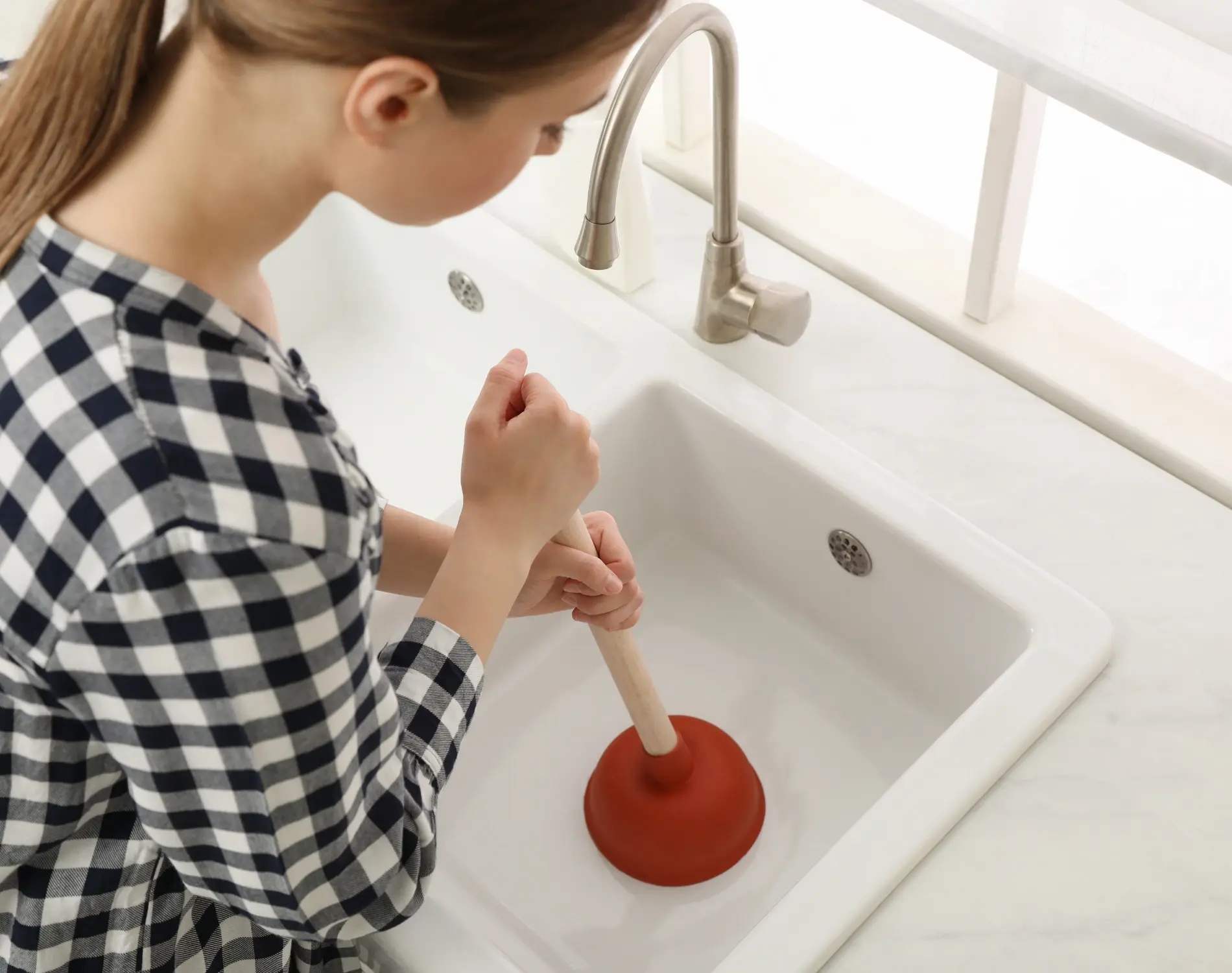
Is your bathroom sink still draining slowly? If you said yes, then try using a small cup-style plunger. It may loosen a clog sitting farther down the drain.
- If your bathroom sink has an overflow opening, cover it with a damp cloth. This helps create the pressure you need for plunging.
- Add enough water to cover the rubber part of the plunger. Place it firmly over the drain and plunge several times using controlled up-and-down movements.
- Remove the plunger and see whether the water drains.
You may need to repeat the process a few times. However, endless plunging isn't a strategy. If nothing changes after several attempts, try the next step.
3. Use Baking Soda and Vinegar for Light Buildup
For a drain that is slow rather than completely blocked, baking soda and vinegar may help loosen some minor organic residue.
- Remove any standing water.
- Pour baking soda into the bathroom sink drain.
- Follow it with vinegar.
- Let the mixture fizz and sit for a while.
- Flush the drain with warm water.
The fizz is satisfying, but it isn't a tiny plumber climbing through your pipes. If your clogged bathroom sink still drains slowly, you may need professional drain cleaning.
4. Pull the Clog Out With a Drain-Cleaning Tool
If hair is the problem, removing it is usually more useful than trying to push it farther down the pipe. A plastic barbed drain-cleaning tool can reach through the drain opening and grab hair collected below the stopper.
- Insert the tool carefully, rotate or move it as directed, and slowly pull it back out.
- Throw the debris in the trash rather than rinsing it back into the sink. Then run water to see whether drainage has improved.
Avoid aggressively pushing sharp or rigid objects into the drain. You don't want your DIY clog removal to become DIY pipe damage.
5. Clean the P-Trap
If the clog isn't near the drain opening, check the curved section of the pipe underneath your sink. That's the P-trap. Its shape allows it to hold a small amount of water, which creates a barrier against sewer gases. It can also collect hair, soap residue, and small objects. Here’s what you should do -
- Clear everything out from underneath the sink.
- Place a bucket under the P-trap.
- Put on gloves.
- Carefully loosen the slip nuts.
- Remove the trap and empty its contents into the bucket.
- Clean out any visible debris.
- Reinstall the trap securely.
After putting everything back together, run the faucet and watch the connections closely for leaks. If you aren't comfortable disconnecting plumbing, skip this step and call a plumber in Reno. There is no prize for turning a clogged sink into a leaking cabinet.
6. Carefully Snake the Drain
If the stopper and P-trap are clear but the sink still won't drain, the clog may be farther along the drainpipe.
- A hand-operated drain snake or auger can reach deeper into the line.
- Feed the cable slowly into the pipe until you feel resistance.
- Rotate the snake according to its instructions to work through or grab the blockage. Pull it back carefully, clean the cable, and repeat if necessary.
- Don't force the cable when it refuses to move. Resistance doesn't automatically mean you've found the clog. You may be hitting a bend or another part of the plumbing.
If you're repeatedly meeting resistance or can't restore drainage, professional drain cleaning can clear the line without relying on guesswork.
| Get That Clogged Bathroom Sink Cleared - Call (775) 331-3636 |
Should You Use Boiling Water or Chemical Drain Cleaners?
When you're trying to unclog a bathroom sink, boiling water or a bottle of chemical drain cleaner can seem like the quickest solution. But neither is right for every clogged bathroom sink.
- Extremely hot water isn’t a good idea for every plumbing system, especially with older pipes or materials that don’t handle heat well. Warm or hot tap water is a safer choice for washing away loosened soap buildup. But if a wad of hair is causing the clog, hot water isn’t going to convince it to leave.
- Chemical drain cleaners may seem like an easy fix, but they can create more problems when used too often or incorrectly. If the chemicals get stuck behind a clog, they can also make drain cleaning more difficult and hazardous. And if damaged pipes or a deeper plumbing issue is causing the blockage, a bottle of drain cleaner simply won’t fix it.
If you've already poured a chemical cleaner into the bathroom sink drain and need a plumber, tell them what you used. They need to know because leftover chemicals can splash or come into contact with them when they open the drain or remove the P-trap.
When Is a Clogged Sink Actually a Bigger Plumbing Problem?
One slow bathroom sink usually points to a localized clog. Several slow fixtures are a different story. Pay attention if -
- More than one sink drains slowly.
- Your bathtub or shower is also backing up.
- A toilet gurgles when you run the sink.
- Water appears in another fixture when one drain is used.
- You notice persistent sewer odors.
- The clog returns shortly after you clear it.
- Wastewater backs up through a drain.
These symptoms can indicate a blockage deeper in the drain or sewer system. If you're also noticing an unpleasant smell, understanding why a clogged drain can cause sewer odor may help you recognize when you're dealing with more than ordinary sink buildup.
When Does Professional Drain Cleaning Make Sense?
If your clogged bathroom sink keeps returning or won't drain at all, the problem may be deeper in the plumbing system. Consider professional drain cleaning if -
- The clog keeps coming back.
- Several fixtures drain slowly.
- DIY methods don't clear the blockage.
- A sewer camera inspection is needed to find deeper buildup, roots, or pipe damage.
- Heavy buildup may require hydro jetting after the pipes are inspected.
For a little hair around the stopper, though? No need to bring out the plumbing equivalent of a pressure washer.
How Can You Keep Your Bathroom Sink From Clogging Again?
The easiest clog to clear is the one that never gets the chance to form. A few simple habits can help keep your bathroom sink draining properly -
- Remove loose hair: Pick hair out of the sink instead of washing it down the drain.
- Clean the stopper: Remove buildup from your pop-up stopper regularly.
- Keep trash out: Never rinse dental floss, cotton swabs, wipes, or similar items down the sink.
- Wipe away residue: Put heavy cosmetic and grooming residue in the trash before rinsing.
- Watch for slow drainage: Take action when your bathroom sink starts draining more slowly.
- Handle recurring clogs: Address the underlying drainage problem instead of repeatedly clearing the same clog.
Think of a slow drain as an early warning rather than a personality trait your bathroom sink has developed.
| Clear the Clog Before It Gets Worse - Call (775) 331-3636 |
Answering Your Common Questions About Bathroom Sink Clogs
A smelly sink doesn't always mean you have a complete clog. Hair, soap, skin oils, and other organic material can collect around the stopper or inside the bathroom sink drain, where bacteria can produce unpleasant odors. Cleaning the stopper and accessible parts of the drain may help. But persistent sewer-like odors should be checked by a professional.
Takeaway
If your bathroom sink is clogged, you should start with the easiest fixes first. You can clean the stopper, remove visible hair, or try a plunger. But if your clogged bathroom sink keeps coming back, gurgles, smells, or affects other fixtures, professional drain cleaning could be the better option.
Sometimes you need a pair of gloves. Other times you need a plumber. If the problem needs professional attention, don’t delay. The longer you wait, the bigger the mess can become.
When the Clog Won’t Budge, Easy Rooter Plumbing Is Ready to Help
A clogged bathroom sink can start as a small annoyance. But when the water stops moving, or the same clog keeps coming back, it can quickly become one more problem you don’t have time for.
Easy Rooter Plumbing has been solving plumbing problems since 1979, with licensed technicians (#0084079/A-15 for sewers, drains, and pipes, and #0026656A/C1) and a BBB-accredited team you can trust.
If DIY methods aren’t enough to unclog your bathroom sink, don’t let the problem linger. Our professional drain cleaning services can get to the real cause and help you get back to using your bathroom without thinking twice about the drain. Call (775) 331-3636 to book a service.