Drain Snaking vs. Hydro Jetting: Which One Does Your Drain Need?
Quick answer: Drain snaking is best for a single, localized clog, like hair in a shower drain or a toilet blockage. Hydro jetting is best when clogs keep coming back, when grease, scale, or tree roots have built up inside the line, or when a main sewer line needs a full cleaning. A camera inspection is the easiest way to know which one your pipe needs.
If your sink, tub, or toilet keeps backing up, you've probably heard both terms. Both clear drains, but they work very differently. Here's how each method works, the pros and cons, and how our Reno plumbers decide which one to use. If you'd rather have a pro handle it, our professional drain snaking and cleaning service covers both.
What Is Drain Snaking?
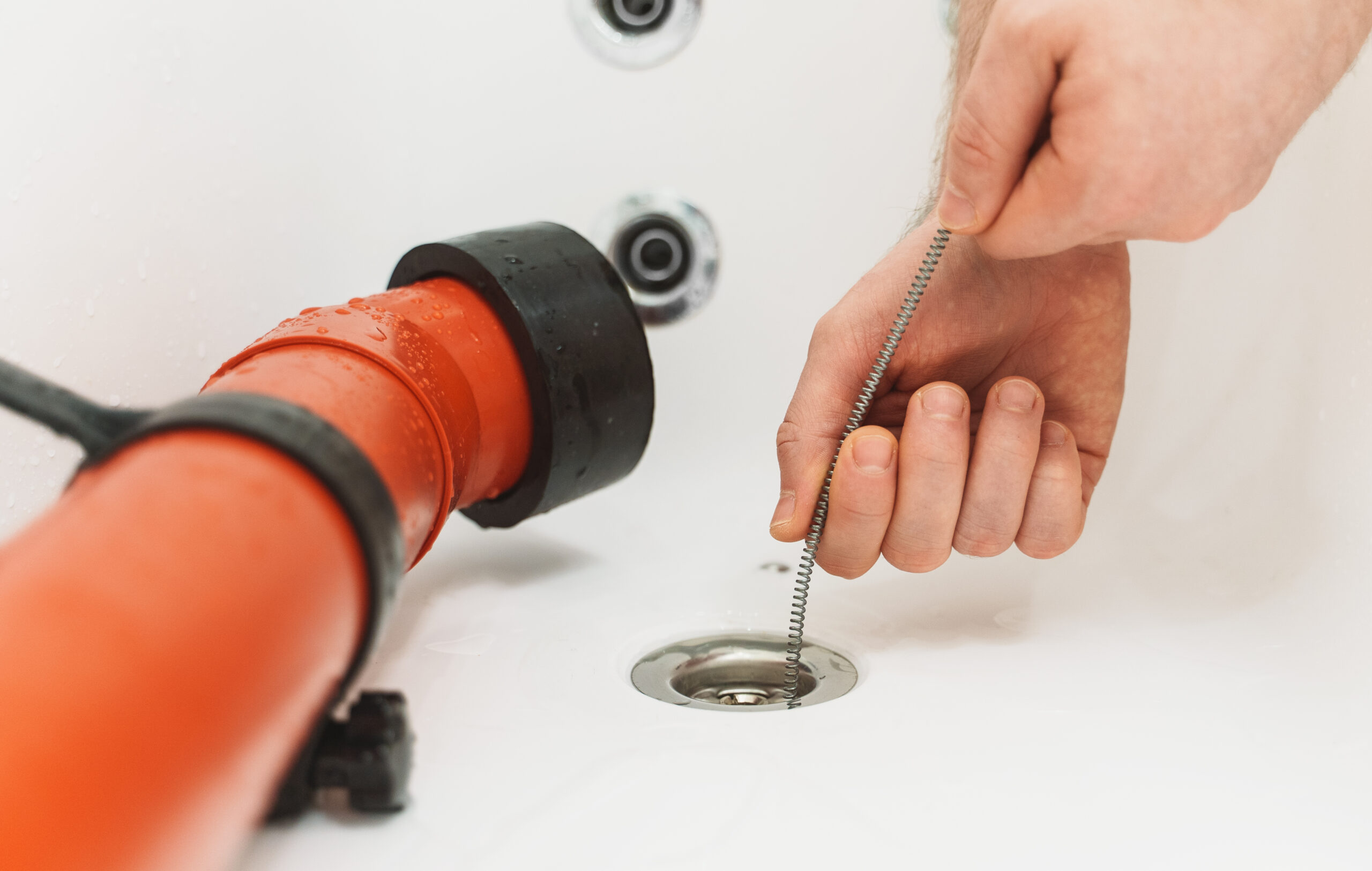
Drain snaking uses a plumber's snake (also called an auger): a flexible steel cable fed into the drain and turned by hand or by a motor. The tip either breaks the clog apart or hooks it so it can be pulled out. Small hand snakes handle sinks and tubs, while larger motorized machines reach main lines.
Pros of Drain Snaking
- Fast for simple clogs: hair, soap scum, and small objects near the fixture usually clear in one visit.
- Lower cost: it needs less equipment and time than hydro jetting.
- Gentle on fragile pipes: when used correctly, it puts less stress on older or weakened lines.
Cons of Drain Snaking
- Leaves buildup behind: a snake punches a hole through the clog but doesn't clean the pipe walls, so grease and scale can close the gap again.
- Limited on tough blockages: heavy grease, mineral scale, and established root masses often need more than a cable.
- Risk if done wrong: the wrong cable size or too much force can scratch pipes or loosen joints, which is why DIY snaking of main lines isn't recommended.
Drain Snaking vs. Hydro Jetting: Side-by-Side
| Factor | Drain Snaking | Hydro Jetting |
| How it works | Cable breaks up or pulls out the clog | Pressurized water scours the whole pipe |
| Best for | Single, localized clogs near a fixture | Recurring clogs, grease, scale, roots, main lines |
| Cleans pipe walls? | No | Yes |
| Old or damaged pipes | Usually the safer choice | Camera inspection needed first |
| Chance of the clog returning | Higher if buildup remains | Lower |
| Cost | Lower | Higher |
Which One Is Right for Your Drain?
Choose drain snaking if:
- Only one fixture is slow or clogged
- The clog is recent and likely hair, soap, or a small object
- Your pipes are older and haven't been inspected
Choose hydro jetting if:
- The same drain clogs again a few weeks after snaking
- Several drains are slow or backing up at once
- You have a restaurant or commercial kitchen with grease buildup
- You suspect tree roots in the sewer line
Kitchen clogs are a common gray area. A clogged disposal is often a snaking job, so start with our guide on how to fix a clogged garbage disposal. If grease has coated the line further down, jetting usually works better.
How Our Reno Plumbers Decide
We don't guess. For recurring clogs or main-line problems, we start with a sewer camera inspection to see what's causing the blockage and check the pipe's condition. Then we recommend the method that fixes the problem without putting the pipe at risk. Sometimes that's a quick snake; sometimes it's a full jetting. For homes that need regular maintenance, we'll also tell you how often to hydro jet your drain lines.
Frequently Asked Questions
Is hydro jetting better than snaking?
Not always. Hydro jetting cleans the whole pipe and works better on grease, scale, roots, and recurring clogs. Snaking is faster and cheaper for a single, localized clog. The right choice depends on the clog and the pipe's condition.
Can hydro jetting damage pipes?
It can if the pipe is already cracked, collapsed, or badly corroded. That's why a camera inspection should come first, especially in older homes.
How long does hydro jetting last?
Because it removes buildup from the pipe walls, results usually last longer than snaking. How long depends on what goes down your drains and the condition of your lines.
Should I snake my own drain?
A small hand snake is fine for a sink or tub trap. For toilets, main lines, or clogs that keep returning, call a plumber. Using the wrong cable or too much force can damage pipes.
Do you offer drain snaking and hydro jetting in Reno?
Yes. Easy Rooter Plumbing provides both, along with camera inspections, across Reno, Sparks, and nearby areas. Call (775) 331-3636 for a free estimate.
Still Dealing With Clogs? Easy Rooter Plumbing Can Help
Easy Rooter Plumbing has served Reno and Sparks since 1979. Our licensed team (NV License #0084079/A-15 and #0026656A/C-1) handles everything from a single slow drain to full sewer line cleaning, and we offer 24/7 emergency plumbing when a backup can't wait. Call (775) 331-3636 to schedule service.